Why Fall Offers the Best Exterior Painting Conditions in Raleigh, If You Know the Window
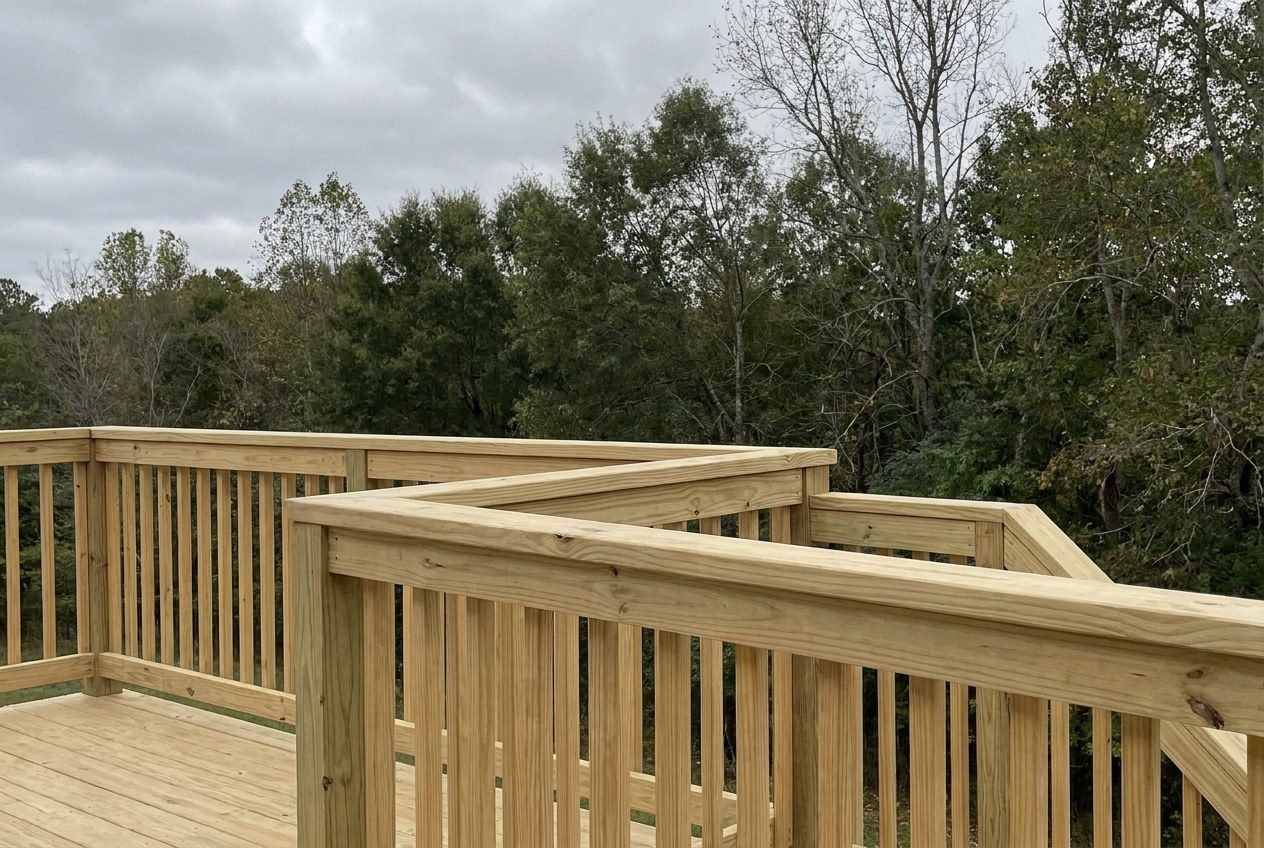
Exterior painting conditions in Raleigh during fall are frequently better than any other season, yet homeowners routinely overlook September through November as a scheduling option. Most assume spring or summer are the obvious choices, then watch a contractor show up in August when it is 97 degrees and wonder why the paint looks wrong a year later. Temperatures cool off, the brutal humidity of a Triangle summer backs down, and the sun sits lower in the sky, all of that works in your favor. The catch is that fall conditions in Raleigh are not consistent. They shift week to week, sometimes day to day, and the window where everything lines up can be shorter than it looks on the calendar.
#What Temperature Range Do Exterior Paints Actually Require?
Most exterior latex paints require both the air temperature and the surface temperature to stay above 50 degrees Fahrenheit during application and for several hours afterward while the film cures. Some newer formulations push that threshold down to 35 or 40 degrees, but those are specialty products, not the default. According to the Architectural Painting Association's cold-weather painting guidance, applying paint below the manufacturer's minimum temperature threshold prevents the film from coalescing properly, which leads to poor adhesion, uneven sheen, and early peeling.
In practical terms for Raleigh, that means late October and November mornings can take you out of the window before you even get started. Surface temperature on north-facing or shaded walls often runs several degrees cooler than the air temperature, and it takes longer to warm up. A day that reads 58 degrees at 8 a.m. may not have workable surface temperatures on a shaded wall until 10 or 11 a.m.
The surface temperature matters more than the air temperature. A thermometer on the shaded north wall of your house is the number a careful contractor is actually checking, not just the weather app.
#How Does Humidity Affect Exterior Paint Application in the Triangle?
High humidity slows the evaporation of water from latex paint, which extends dry time and keeps the film vulnerable to dust, pollen, and insect traffic for longer than it should be. Most paint manufacturers recommend avoiding application when relative humidity exceeds 85 percent. Raleigh's fall mornings often start above that threshold, particularly after overnight lows drop into the 40s and 50s.
The other humidity problem is one people rarely think about: rapid humidity swings. On a clear fall afternoon in the Triangle, relative humidity can drop from 85 percent at dawn to under 40 percent by early afternoon. That sounds like good news, but paint applied during a low-humidity stretch and then exposed to rising evening moisture before it has fully cured can develop surface defects. Timing both the start and the stop of the work day matters.
| Condition | Acceptable Range | Raleigh Fall Reality | Risk If Ignored |
|---|---|---|---|
| Air and surface temperature | 50 degrees F or above (most latex); 35-40 degrees for some specialty formulations | Often borderline at dawn in October and November; warm by midday | Poor film formation, early peeling, adhesion failure |
| Relative humidity | Below 85 percent | High in early morning, often drops sharply by afternoon | Extended dry time, surface contamination, sheen problems |
| Dew point and surface moisture | Surface must be dry; dew point at least 5 degrees below surface temp | Morning dew common September through November | Blistering, fish-eye defects, bond failure under the film |
| Wind speed | Moderate; enough to aid drying, not so strong as to cause spray drift or overly fast surface dry | Generally manageable in fall, occasionally gusty ahead of fronts | Uneven application, contamination, lap marks |
#Why Is Morning Dew Such a Concern for Fall Exterior Painting?
Morning dew is the most underestimated scheduling problem in fall exterior painting. When overnight temperatures fall and surfaces cool below the dew point, moisture condenses on siding, trim, and bare wood. If you paint over a surface that still carries dew, you trap that moisture under the film. The result is usually blistering, poor adhesion, or a bond failure that does not show up until the following summer when temperatures push that trapped moisture through the coating.
In Raleigh, dew is common from September through November, especially after clear nights when surfaces radiate heat quickly. A reliable rule of thumb, supported by EPA guidance on coating application and moisture management, is to wait until the surface temperature is at least 5 degrees Fahrenheit above the dew point before applying paint. On many fall mornings in the Triangle, that condition is not met until mid-morning or later.
Run your hand across the siding on a fall morning before any painting starts. If it feels even slightly cool and damp, or if you can see any gloss or sheen from moisture, the wall is not ready. A dry surface feels the same temperature as the air around it.
#How Do Contractors Adjust Schedules to Hit the Right Application Window?
A contractor who takes exterior painting conditions seriously in Raleigh's fall will typically delay their start time rather than show up at 7 a.m. and go straight to work. Prep, masking, moving equipment, and surface cleaning can happen in the early hours while surfaces are still warming. Actual paint application often makes more sense starting at 9 or 10 a.m., depending on the orientation of the walls being worked.
The other scheduling adjustment involves stopping early enough in the afternoon. Paint needs several hours to cure before overnight temperatures drop, and Raleigh fall evenings cool off quickly once the sun goes below the tree line. On a day in late October, a contractor may have a usable window of roughly five to six hours in the middle of the day. Splitting work across multiple days rather than rushing to finish is the right call.
- Check the dew point, not just the temperature, before starting each morning.
- Prioritize south-facing and west-facing walls earlier in the day when sun exposure warms them faster.
- Save north-facing and shaded surfaces for days with a longer warm stretch.
- Stop applying paint at least two to three hours before the temperature is forecast to drop below 50 degrees.
- Watch the five-day forecast. A cold front moving through mid-project may require a pause, not a push.
#Is Fall a Reasonable Time to Schedule Exterior Painting as Part of a Home Renovation in Raleigh?
Yes, and in many cases it is the right time. The lower humidity, moderate temperatures, and reduced UV intensity that come with Raleigh's fall season can produce a better cure environment than midsummer painting in the Triangle, when high heat causes paint to dry too fast on hot surfaces and lap marks become a real problem. If you are coordinating exterior paint work alongside broader home renovations or general contracting in Raleigh, fall scheduling is worth taking seriously, just build buffer days into the plan for mornings that are too cold or too damp to start on time.
Fall rewards patience and schedule flexibility. The contractors who do good work in this season are the ones who check conditions daily rather than keeping a rigid 7-to-4 routine regardless of what the weather is doing. Knowing what to watch for also helps you evaluate whether a painting contractor is taking conditions seriously or cutting corners on timing.
#Common Questions
What is the lowest temperature at which you can apply exterior paint in Raleigh's fall?
Most exterior latex paints should not be applied when air or surface temperatures are below 50 degrees Fahrenheit, and that threshold applies during application and for several hours afterward while the film cures. Some specialty formulations allow application down to 35 or 40 degrees, but those are not standard products. In Raleigh's fall, the concern is usually the surface temperature on shaded or north-facing walls, which can remain below 50 degrees well into mid-morning even when the air temperature is higher.
How long should you wait after morning dew before painting exterior surfaces?
Wait until the surface temperature is at least 5 degrees Fahrenheit above the current dew point, and the surface itself feels completely dry to the touch. In Raleigh's fall, that condition often is not met until 9 to 11 a.m., depending on overnight lows and cloud cover. Running your hand along the siding is a simple check: if it feels cool or slightly damp compared to the air, it is not ready.
Does humidity affect how exterior paint looks once it dries?
Yes, high humidity during or shortly after application can cause visible problems including uneven sheen, slower dry time that leads to contamination in the film, and in some cases a condition called "blush" where the surface takes on a whitish or cloudy appearance. Raleigh's fall mornings often start with relative humidity above 85 percent, which is the threshold most manufacturers cite as the upper limit for acceptable painting conditions. Waiting for humidity to drop before applying paint is not overly cautious; it is correct practice.
Can a home renovation be scheduled so exterior painting wraps up before winter in Raleigh?
Generally yes, if work begins by mid-October. Raleigh's fall climate typically offers workable painting conditions through much of November, though the daily window narrows as the season progresses. A contractor planning around these conditions should build buffer days into the schedule for mornings that are too cold or too damp to start on time, and should stop applying paint with enough afternoon remaining for the film to cure before evening temperatures drop.